Technical due diligence · Intralogistics & warehouse automation

Deep dive into the asset before you own it.

An independent, operator's read on the asset — the physical system, the software behind it and whether the numbers in the model survive contact with a peak week. No vendor ties, no stake in the outcome.

Matthias Merz, Dipl.-Inform. (FH)  ·  25 years in intralogistics  ·  German and English  ·  Projects worldwide

Background

  • KION Group
  • SSI Schäfer
  • Vanderlande
  • Linde Material Handling
The problem

What financial diligence cannot see

Commercial and financial DD tell you what the target earned. Neither tells you whether the automation producing those earnings will still hit its numbers in year three — or what happens the first time volume goes 30 % above plan.

01

A design figure is not a throughput figure

Peak capacity signed off on paper and sustained real-world output under the target's own SKU mix are two different numbers. Only the second one earns money.

02

The WMS may not be a product

A code base carrying one customer-specific branch per site has a maintenance cost — and a key-person risk — that rarely appears in the model.

03

Ramp-up risk lands after closing

A system that has been accepted is not a system that performs. The gap between the two is measured in months of lost volume.

In an automated warehouse, the operating model and the machinery are the same object. You cannot value one without reading the other.

The risk

Four things that surface after closing

Every one of these is findable before signing. None of them is findable from a data room alone.

  1. Throughput that was never achievable

    Capacity demonstrated on a clean test profile, never under real order structure, real seasonality and a real SKU mix. The shortfall is permanent and it is structural.

  2. A ramp-up curve built on optimism

    Final acceptance and full performance are different milestones. The distance between them is volume the business case has already spent.

  3. Software that is a project, not a product

    Per-site branches, undocumented interfaces, licence exposure and two people who understand the material flow logic. One of them is close to retirement.

  4. Service and spare parts

    Frequently the most profitable line in the target and the least examined. Vendor contract terms decide whether that margin survives the transaction.

Why me

I have sat on all three sides of this table

Most technical diligence in this sector is written by people who have read about these systems. Here is where my judgement comes from.

01 — Sold it

Vice President Food Retail

SSI Schäfer

Ran the vendor side of the table globally, carrying an order intake above €100m a year and negotiating contracts at that scale.

I know how a throughput figure gets built into a proposal and which assumptions are quietly doing the work.

02 — Built it

Integration and commissioning

SSI Schäfer · Vanderlande

Commissioned and ramped up automated distribution centres in the US, Europe and Australia, including two systems that had never been built before.

Hired and led the resident maintenance teams. I have watched these systems fail at three in the morning.

03 — Judged it

Senior Director Software Solutions EMEA

KION Group

Owned the intralogistics software portfolio across EMEA — product strategy, development, rollout.

Ran technical due diligence on KION's own M&A candidates, up to and including the recommendation put in front of the board.

Independence

Independent of every vendor in the market

Twenty years of that experience was earned on the vendor side. That is exactly why the read is sharp — and exactly why the question of bias deserves a straight answer rather than silence.

No vendor relationships

No agency agreements, no reseller arrangements, no referral fees or commissions from any equipment supplier or software vendor. Nothing about my income depends on which system you end up with.

Not a system integrator

I do not design, supply or install the equipment I assess. There is no follow-on implementation contract waiting behind the report, so no incentive to find work rather than find facts.

Paid for the opinion, not the outcome

Fixed fee per phase or a daily rate, agreed before the work starts. No success fee tied to whether a deal completes, so "walk away" costs me nothing to write.

Conflicts declared before engagement

If I have worked with the target, the vendor or the incumbent integrator, you hear it before you appoint me — not in a footnote afterwards.

Scope

Four lenses on the same asset

The physical system

Automated storage and retrieval (ASRS), shuttles, conveying, AMR and AGV fleets, robotics, sorters. Condition and remaining life, spare-parts exposure, bottleneck analysis and realistic sustained throughput measured against the target's own order profile — not the vendor's test profile.

The software

WMS, WCS and material flow control (MFC) architecture, down to the PLC and SCADA layer. Product or project? Release and DevOps discipline, interface debt, licensing exposure, documentation quality and how much of the material flow logic lives in one person's head.

Operational reality

Availability and its causes, maintenance maturity, staffing and shift model, change-request backlog and whether the KPIs in the data room match what the floor actually runs at during peak.

The commercial position

Vendor contracts, acceptance status, open claims and penalties, service and spare-parts agreements and what the stated CAPEX plan is genuinely committed to versus what it has deferred.

How it works

Three ways to bring me in

Scoped to the deal stage, so the cost sits in proportion to the decision it supports.

Red flag review

5–10 working days
For
Screening and IOI stage or when you need to decide whether the asset is worth a full look.
You get
A short written opinion naming the material technical risks, the questions to force into management sessions and the SPA, plus a clear view on whether deeper work is warranted.
Core service

Full technical DD

3–5 weeks
For
Confirmatory phase, once the asset is worth the spend.
You get
Site visits, vendor and management interviews, a written report against each of the four lenses, a quantified risk register, plus a CAPEX and OPEX view across the intended hold period.

Post-merger support

Scoped per mandate
For
After signing — for the remediation the diligence identified or for a programme without an owner.
You get
Integration management, interim leadership of the automation programme, vendor and claim management or oversight of a ramp-up that has stalled.
Fixed fee per phase or daily rate Reporting in German or English Based in Thailand — supporting projects worldwide

What actually happens

The full engagement, end to end. A red flag review stops after step three and compresses the rest into a short written opinion.

  1. Discovery call

    Thirty minutes on the asset, the timetable and what you already suspect. No charge and no obligation.

    Day 0
  2. Data room review

    Layouts, throughput specifications, acceptance protocols, availability records and vendor contracts. I come back with a targeted document request rather than a generic checklist.

    Week 1
  3. Site visit

    The system running under real order profile, ideally during a peak shift. Interviews with operations, maintenance, IT and the vendor.

    Week 1–2
  4. Technical evaluation

    Sustained throughput modelled against the target's own SKU mix and seasonality. Software architecture, interface debt and licence exposure assessed. Spare-parts and obsolescence review.

    Week 2–4
  5. Executive report

    Findings against each of the four lenses, a quantified risk register with cost and probability, plus a CAPEX and OPEX view across the intended hold period.

    Week 4–5
  6. Decision support

    A debrief with the deal team, the questions to force into management sessions, the clauses worth putting into the SPA and a view on price impact.

    Before signing
Evidence

Selected projects from 25 years in the field

M&A evaluation · Global intralogistics group · China

Finding and validating an acquisition target

The mandate. Identify the right partner for a global intralogistics group to invest in, in order to add AMR technology to its product portfolio.

The work. Market analysis of the AMR landscape. A shortlist built against defined partner criteria. Management interviews, site visits and hands-on evaluation of the products and the underlying technology. Negotiation of the cooperation agreement.

The outcome. Recommendation prepared and presented to the board. The group invested in the recommended partner.

The same method a fund needs on a target: screen the market, build the criteria, then go and look at the machines.

Context
Portfolio gap in autonomous mobile robots
My role
Led the evaluation end to end, through to board recommendation
Technology
Autonomous mobile robots including fleet controller software
Outcome
Investment in the recommended partner completed
Project rescue · Deep-freeze producer · Belgium

Three months from stalled to accepted, with no penalties

The situation. A deep-freeze installation that had not reached final acceptance. Open points across both software and mechanics, with a project that could not be closed.

The work. Took over project responsibility, then worked directly alongside the software team and the mechanical team to drive every remaining open point to closure.

The outcome. All open points closed within three months. Final acceptance achieved and the project closed with no penalties.

This is exactly the condition a technical due diligence exists to find — before you own it.

Asset
Automated deep-freeze channel storage, Belgium
Technology
High-bay channel storage, pallet conveying system, WCS
My role
Took over project responsibility from the incumbent project manager
Outcome
Final acceptance achieved, project closed without penalties
First of a kind · Grocery wholesale · United States

The first fully automatic case picking installation of its kind

Managed commissioning and ramp-up of the entire system and solved the problems that come with unproven technology. Hired and led the 16-strong resident IT, PLC and mechatronics team and ran a structured lessons-learned process back into the equipment and software.

Technology: Automated multi-level shuttle, delayering robots, case wheelers, case stacking robots, WCS, pack-pattern generator.

Outcome: Ramped to full performance. Final acceptance on schedule and in budget.

First of a kind · Grocery wholesale · Australia

The first 3D-Matrix SCP system of its kind

Owned the sales and design process, contract negotiation and overall project management with P&L responsibility — then carried the new technology's teething problems through to a clean handover.

Technology: Automated multi-level shuttle, delayering robots, case stacking robots, WCS, pack-pattern generator.

Outcome: Successful sales process and installation management, handed to the commissioning team on time.

Operations · Drugstore chain · United States

Two fully automated distribution centres serving 800 stores

Managed commissioning and ramp-up of both systems across two sites in the United States and built the resident maintenance organisation — 70 FTE across IT, PLC and mechatronics.

Technology: Automated high-bay warehouse, automated receiving with decant and tilt-tray sorter, miniload with zone picking, GTP picking with carousel storage, automatic tote stacking, WCS.

Outcome: Ramped to full performance and beyond. Final acceptance on schedule and in budget, followed by two years of profitable after-sales operation.

Optimisation · Multichannel retail · United Kingdom

Performance improvement across a live multi-area warehouse

Analysed the operation for process and storage efficiency and reworked the interaction between the equipment supplier's WMS and the customer's ERP system.

Technology: Automated high-bay warehouse, miniload, GTP picking with carousel systems, hanging sorter, WMS and WCS.

Outcome: More than ten actions identified to improve product flow and reduce personnel cost, then implemented under my oversight and tracked against purpose-built KPIs.

Sales and design · Grocery wholesale · Norway

Deep-freeze SCP installation in Scandinavia

Owned the sales and design process for the system, negotiated the contract and handed the project over to the realisation team.

Technology: Automated shuttle storage, delayering robots, case stacking robots, WCS, pack-pattern generator.

Outcome: Successful sales process and contract negotiation, clean handover to realisation.

Sales and design · Grocery retail · Germany

Multi-area automated warehouse — building included

Owned the sales and design process for the whole facility including the building itself, negotiated the contract and handed over to the realisation team.

Technology: Building, automated high-bay warehouse, shuttle system, pallet conveyor, multi-zone picking, AGVs, WCS.

Outcome: Successful sales process and contract negotiation, clean handover to realisation.

Track record

Where the judgement comes from

25 years in intralogistics and warehouse operations
€100m+ annual order intake carried as VP Sales
2 first-of-a-kind systems commissioned
70 FTE in the largest resident team built and led
Sectors
  • Drugstore chains
  • Grocery wholesale
  • Grocery retail
  • Multichannel retail
  • Deep-freeze logistics
  • Intralogistics groups
Geographies
  • Germany
  • United Kingdom
  • Belgium
  • Norway
  • United States
  • Australia
  • China
  • Thailand
Further services

Beyond the transaction

The same experience applied to your own operation: from planning through vendor selection to running the system.

Project management

From data analysis through to handover into the service phase.

Project planning

  • Data and process analysis
  • Material flow design
  • Facility planning and layouting

Vendor selection

  • Functional tender documents
  • Vendor-specific tender documents
  • Evaluation of vendor proposals

Project execution

  • Progress monitoring and reporting
  • Supplier management
  • Change management
  • Functional, availability and final acceptance
  • Transition to the service phase

Operations optimisation

Run an existing system faster, more reliably and at lower cost.

Process optimisation

  • Data and process analysis
  • Process and technical simulation
  • Process design and implementation
  • Identifying automation opportunities
  • ROI calculations

Operations consulting

  • Identification of meaningful KPIs
  • Design of KPI monitoring systems
  • Decision support systems
  • Workforce planning and management
  • Change management

M&A and interim

Scrutiny before the transaction, delivery after it.

Due diligence

  • Software assessments
  • DevOps analysis
  • Licensing models and software valuation
  • Business model verification
  • Market analysis

Integration and interim management

  • Post-merger integration consulting
  • Integration management
  • Interim leadership of automation programmes
  • Vendor and claim management
Profile

Matthias Merz

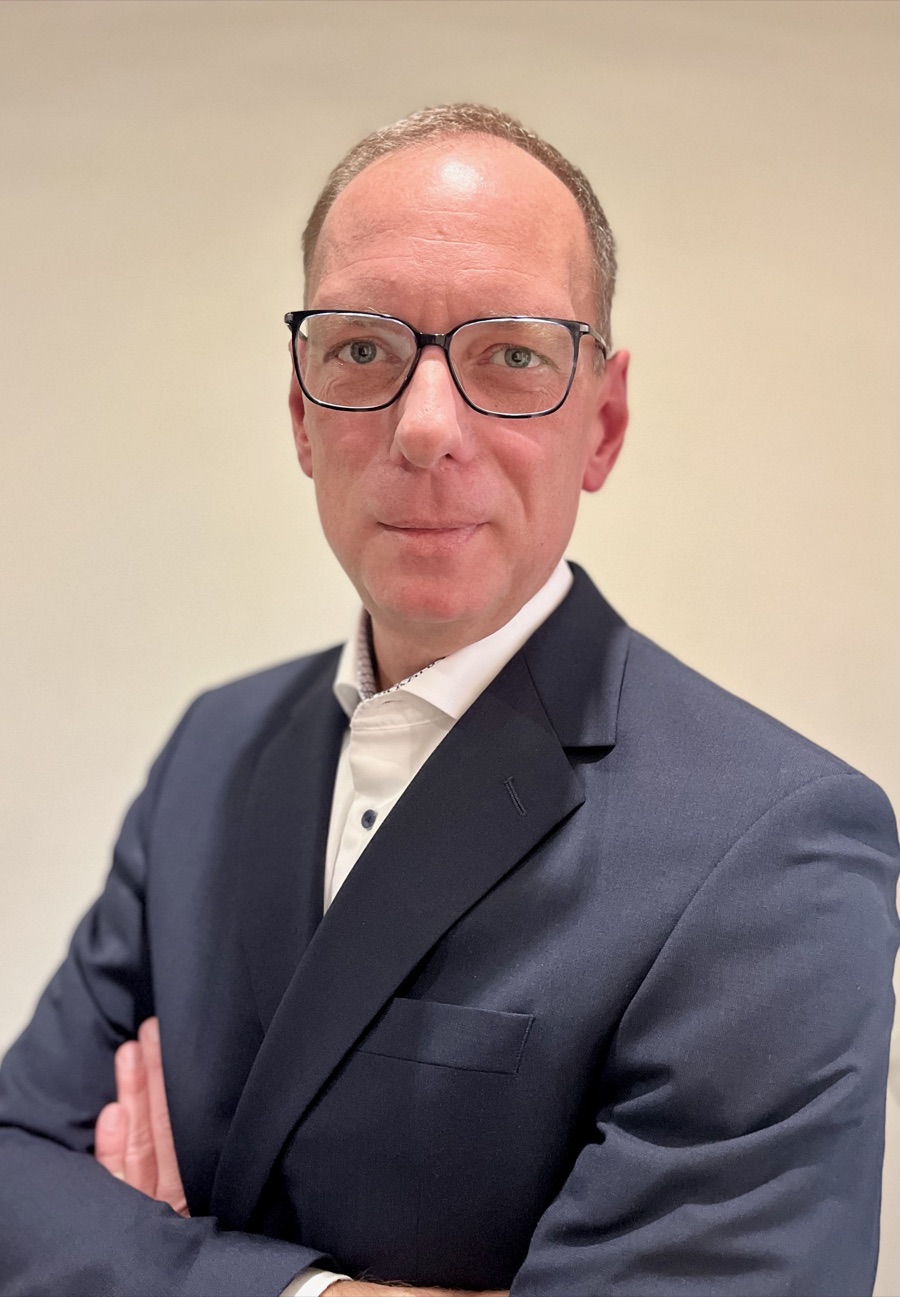
Portrait of Matthias Merz, founder of LogistiXpert

Matthias Merz Dipl.-Inform. (FH) · Founder, LogistiXpert

Based
Thailand — supporting projects worldwide
Languages
German (native), English (fluent, contractual level)
Education
Diplom-Informatiker (FH), THM Giessen, 2000
  1. 2025 – Founder and Principal LogistiXpert — intralogistics consulting, interim management, M&A advisory
  2. 2018 – 2024 Senior Director Software Solutions EMEA KION Group AG / Linde Material Handling GmbH, Aschaffenburg
  3. 2016 – 2018 Vice President Food Retail SSI Schäfer Automation GmbH, Giebelstadt — global
  4. 2015 – 2016 Director Business Consultancy SSI Schäfer Noell GmbH, Giebelstadt
  5. 2015 Integration Manager Vanderlande Industries GmbH, Mönchengladbach
  6. 2012 – 2014 Director Integration Management SSI Schäfer Noell GmbH, Giebelstadt — global
  7. 2006 – 2012 Site Manager / Manager Logistics Operations SSI Schaefer Systems International, USA
  8. 2001 – 2006 Head of Software Development mbi GmbH, Hüttenberg, Germany
  9. 2000 – 2001 Systems Analyst Lilly Deutschland GmbH, Bad Homburg
Contact

Let's deep dive together.

Happy to walk through a live situation under NDA or to run a short red-flag read on something already on your desk.

Confidentiality is a given. A mutual NDA can be in place before the first substantive conversation.
  • Email
    m.merz@logistixpert.de
  • Phone DE
    +49 151 25062423 Germany — CET/CEST
  • Phone TH
    +66 61 024 4850 Thailand — ICT (UTC+7)
  • LinkedIn
    Matthias Merz
  • Languages
    German · English